
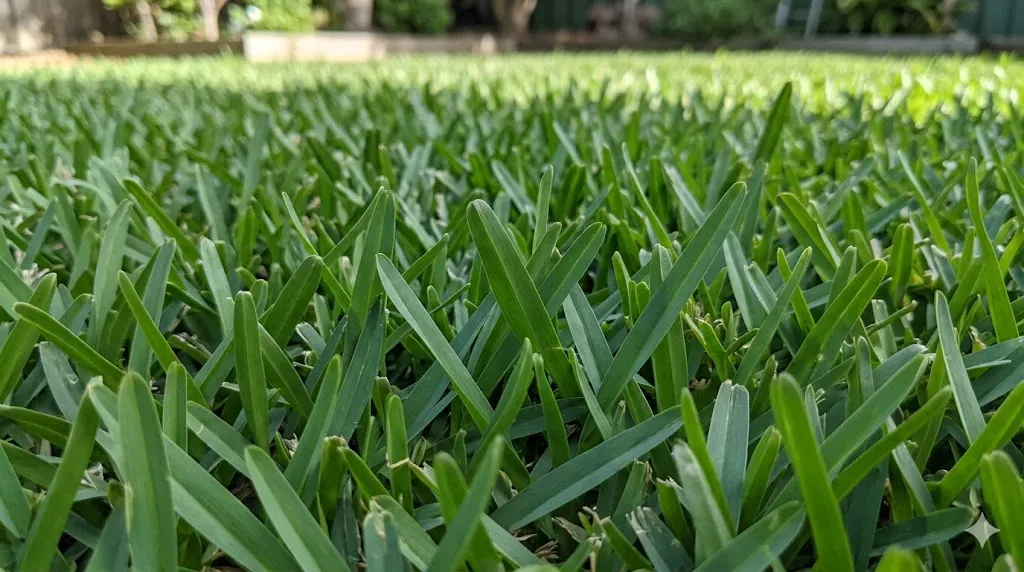
Sir Walter Buffalo is the most popular lawn choice in the Hills District — and for good reason. It is shade-tolerant, hard-wearing, drought-resistant, and creates the dense, carpet-like lawn that Australian homeowners love. But it has specific care requirements that differ from Kikuyu and Couch.
Why Sir Walter Thrives in the Hills District
Our clay soils and warm summers actually suit Buffalo well — it is more drought-tolerant than Kikuyu and handles our occasional wet periods better than Couch. The main challenges are compaction (clay soil hardens over time) and shade from the many mature trees on Hills District properties.
Related: best grass types · fertilising schedule · lawn care guide
Mowing Sir Walter Buffalo
- Height: 35-50mm in summer, 30-40mm in cooler months. Buffalo should be kept longer than Kikuyu — scalping it short will kill it.
- Frequency: Weekly during spring and summer. Every 2-3 weeks in winter.
- Blade sharpness: Critical. Buffalo has thick, fibrous leaves. Dull blades tear instead of cut, leaving brown, frayed tips.
- Never scalp: Cutting too low exposes the stolons (runners) and invites weeds. If you see brown patches after mowing, your mower is set too low.
Watering Sir Walter
Established Buffalo needs surprisingly little water — its deep root system taps moisture well below the surface. During summer heatwaves, one deep watering per week is better than daily light sprinkles. Early morning is the best time — evening watering encourages fungus. If your Buffalo goes brown in a drought, don’t panic — it is dormant, not dead. It will green up within days of rain.
Common Sir Walter Problems in the Hills District
Still deciding on grass? See our comparison of Buffalo, Kikuyu, and Couch. If your Sir Walter has brown patches that peel back, you may have lawn grubs.
Lawn Grubs
African Black Beetle larvae love Buffalo roots. Brown patches that peel back like carpet are the telltale sign. Most active late spring through summer. Early treatment prevents extensive damage.
Shade Decline
Even shade-tolerant Buffalo needs some sun. Under dense tree canopy, it will thin out over time. If you have heavily shaded areas, consider pruning lower branches or accepting that those spots will always be patchy.
Compaction
Clay soil + foot traffic = hard, water-repellent ground. Annual aeration in autumn relieves this and keeps your Buffalo healthy.
Buffalo Weed Sensitivity
Buffalo is sensitive to some common herbicides — particularly those containing Dicamba or MCPA. Never use a generic “lawn weeder” on Buffalo without checking the label. We use Buffalo-safe selective herbicides that target weeds without damaging your grass.