
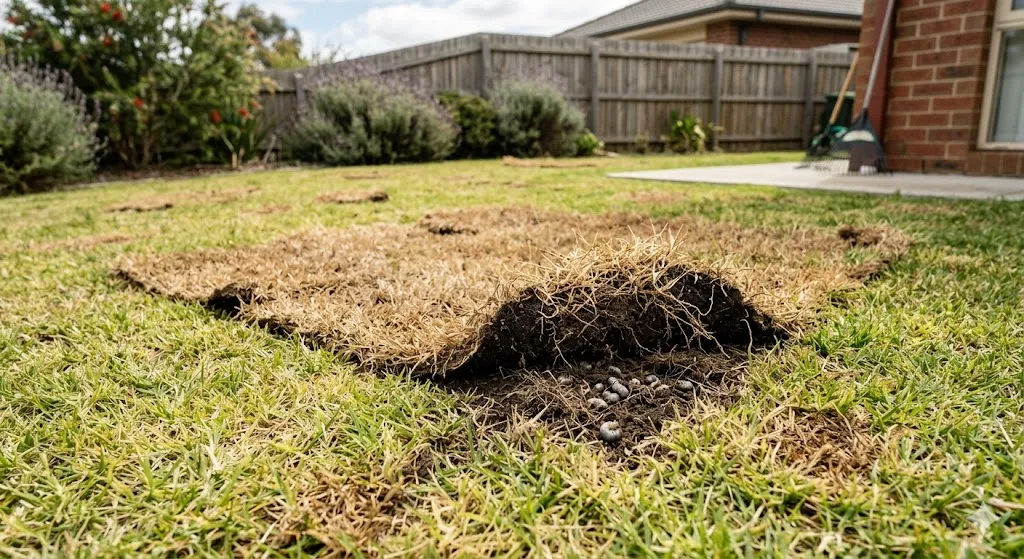
You walk outside, and a patch of your lawn looks dead. You tug at it — and it peels back like a piece of carpet. No roots. Just bare soil underneath.
That is African Black Beetle damage. And in the Hills District, it is more common than most homeowners realise.
Related: weed control · lawn care guide · professional lawn care
What Are Lawn Grubs?
Lawn grubs are the larvae of the African Black Beetle. The adult beetle lays eggs in the soil during spring. When the eggs hatch, the larvae feed on grass roots — destroying your lawn from below. By the time you see brown patches on the surface, the grubs have already been feeding for weeks.
How to Know If You Have Lawn Grubs
- The brown patch test: Tug on a brown area. If it lifts away like carpet with no roots attached, grubs have eaten the root system.
- Spongy feel: Walk on the affected area. If it feels soft and spongy, the soil underneath has been hollowed out.
- Increased bird activity: Birds pecking at your lawn are a sign they are feeding on grubs just below the surface.
- Beetles at night: Adult black beetles are most active in late spring and summer after dark. If you see them around outdoor lights, they are likely laying eggs in your lawn.
When Are Lawn Grubs Most Active in the Hills District?
The cycle goes like this:
- Spring (Sep-Nov): Adult beetles emerge, mate, and lay eggs. This is when treatment should start.
- Summer (Dec-Feb): Larvae hatch and feed aggressively. Damage becomes visible. Brown patches appear.
- Autumn (Mar-May): Larvae move deeper into the soil as temperatures drop. Damage slows but existing grubs survive.
- Winter (Jun-Aug): Grubs go dormant deep in the soil. Treatment is less effective — they will re-emerge in spring.
Can You Treat Lawn Grubs Yourself?
Yes — granular lawn beetle and grub killers are available at Bunnings and garden centres. The key is timing: apply in early spring before eggs hatch, or in late spring once you see the first signs of damage. Water the treatment in well.
But if you have lost large sections of lawn, treatment alone will not fix the bare patches. You will need to reseed or returf the damaged areas once the grubs are under control.
Lawn grubs are just one of several seasonal problems Hills District lawns face. See our seasonal lawn care guide for what to watch for throughout the year, and our bindii treatment guide if prickles are also a problem.
When to Call a Professional
If the damage covers more than a few small patches, if you are unsure whether the problem is grubs, disease, or something else, or if you simply do not have time to deal with it — we can assess your lawn and tell you exactly what is happening. Identifying the problem correctly is half the battle.